
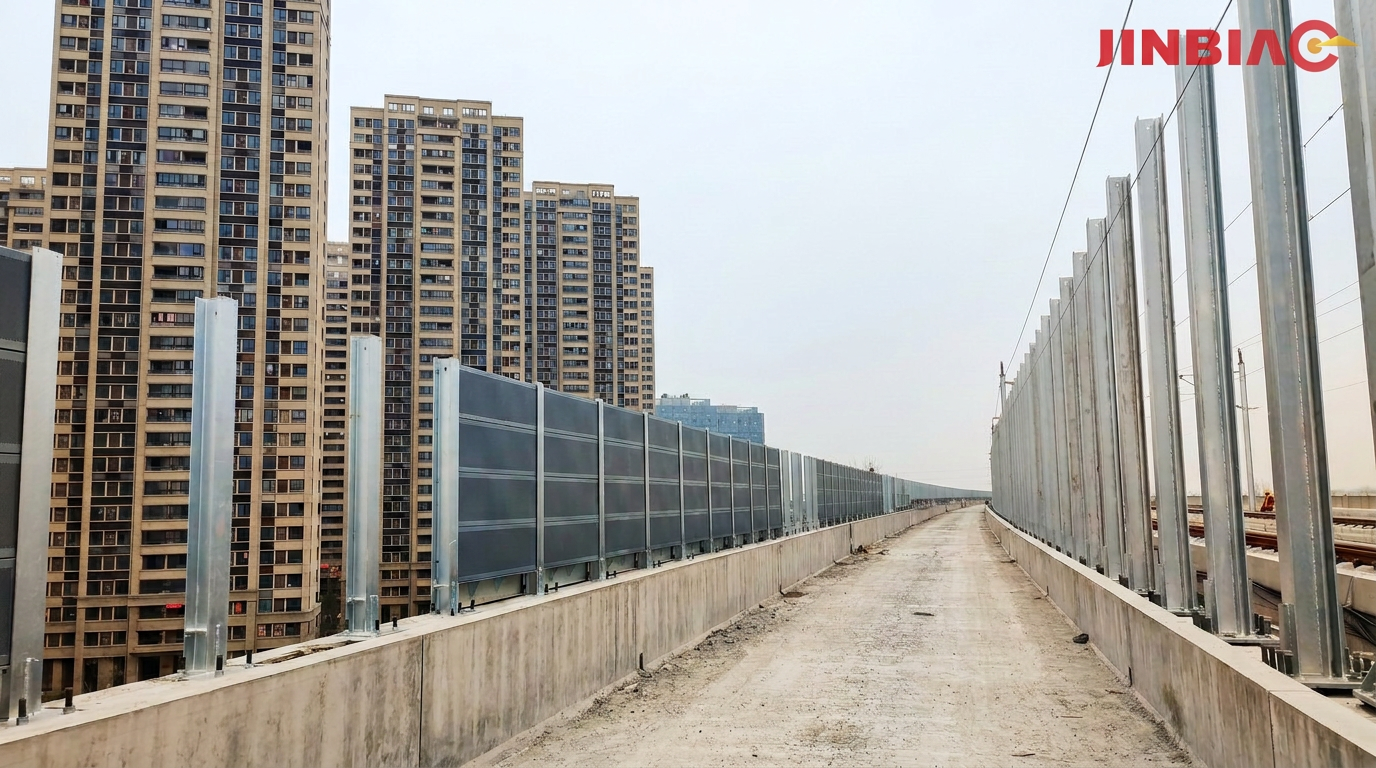
Noise barriers are widely used along highways, viaducts, railways, and industrial zones to reduce traffic noise and improve the surrounding living environment. Since they are exposed to sunlight, rain, salt spray, vehicle exhaust, and other harsh outdoor conditions for many years, the surface treatment process plays a critical role in determining the service life, acoustic performance stability, and visual appearance of the barrier system.
1. Four Core Benefits of Surface Treatment
Surface treatment is not only about appearance—it serves four essential functions:
• Corrosion Protection – Effectively prevents rust and corrosion of metal substrates, ensuring structural safety.
• Aesthetic Enhancement – Provides a wide range of colors and finishes, allowing the barrier to blend harmoniously with its surroundings.
• Weather Resistance – Protects against UV radiation, temperature fluctuations, humidity, and other environmental factors, ensuring long-term durability.
• Reduced Maintenance – High-quality coatings significantly reduce maintenance frequency and lifecycle costs.
2. Comparison of Main Surface Treatment Methods
2.1 Hot-Dip Galvanizing (HDG)
Hot-dip galvanizing involves immersing steel components into molten zinc at approximately 450°C, creating a dense zinc coating that is metallurgically bonded to the steel surface.
The zinc layer is typically 85 μm or thicker and provides active corrosion protection through the cathodic protection principle.
• Service life of 15–20 years in standard outdoor environments.
• Advanced processes such as shot blasting before galvanizing can increase zinc adhesion by up to 30%, extending the service life to more than 50 years.
• Ideal for highways, railways, and general urban infrastructure projects due to its excellent cost-performance ratio.
2.2 Electrostatic Powder Coating
Electrostatic powder coating uses electrically charged powder particles that are applied to the surface and then cured at high temperature, forming a uniform coating typically 30–60 μm thick.
Key advantages include:
• Wide range of customizable colors.
• Attractive and uniform appearance.
• Suitable for indoor or relatively dry environments when used alone.
For outdoor projects, hot-dip galvanizing combined with powder coating is the preferred solution. This dual-protection system can improve corrosion resistance by 30–50% compared with galvanizing alone, making it the most widely used option for modern noise barrier projects.
2.3 Fluorocarbon Coating (PVDF Coating)
Fluorocarbon coatings offer superior weather resistance and outstanding protection against salt spray and chemical corrosion.
Main benefits include:
• Longest coating lifespan among common surface treatment options.
• Excellent UV resistance and color retention.
• Self-cleaning properties that help repel dust and water.
• Reduced maintenance requirements over the long term.
This solution is especially suitable for:
• Coastal areas with high salt exposure.
• Chemical plants and industrial parks.
• Landmark projects with demanding aesthetic requirements.
3. Texture, Color, and Functional Design
Beyond corrosion protection, surface treatment also contributes to the visual appeal of noise barriers.
Surface Texture
Metal barriers can incorporate perforated patterns, embossed designs, or profiled surfaces to create distinctive visual effects and enhance architectural aesthetics.
Color Customization
Colors can be customized according to RAL color standards or local color specifications.
Popular options include:
• RAL 6029 Green
• RAL 5017 Blue
Well-designed color schemes can improve the surrounding landscape and even help reduce driver fatigue.
Anti-Graffiti Coatings
Urban noise barriers are often affected by graffiti and vandalism. Special anti-graffiti powder coatings allow paint and markings to be removed easily, significantly reducing maintenance efforts and costs.
4. How to Choose the Right Surface Treatment Solution
The selection of a surface treatment system should be based on four key factors:
Environmental Corrosion Level
• Inland and dry regions: Hot-dip galvanizing or hot-dip galvanizing + powder coating.
• Coastal areas, industrial zones, and acid-rain environments: Hot-dip galvanizing + fluorocarbon coating or other advanced multi-layer coating systems.
Design Service Life
• 15–20 years: Hot-dip galvanizing (≥85 μm).
• 25+ years: Dual-protection systems such as galvanizing + powder coating.
• 50+ years: Premium multi-layer coating systems designed for landmark infrastructure projects.
Aesthetic Requirements
When color consistency, texture, or architectural appearance is important, powder coating or fluorocarbon coating is recommended due to their extensive color customization capabilities.
For urban applications, anti-graffiti coatings can also be incorporated.
Budget Considerations
• Powder coating alone offers the lowest initial cost but provides limited corrosion protection.
• Hot-dip galvanizing delivers the best balance between cost and durability.
• Premium coating systems require a higher initial investment but can significantly reduce lifecycle maintenance costs.
Conclusion
Surface treatment for noise barriers combines corrosion protection technology, material engineering, and landscape design into a comprehensive solution. Selecting the right treatment system not only ensures long-term structural performance but also enhances the visual quality of the surrounding environment.
By carefully considering environmental conditions, service life requirements, aesthetic expectations, and project budgets, owners can achieve the optimal balance between performance and cost.
For more information about noise barrier surface treatments or customized project solutions, please feel free to contact us.
Post time: Jul-27-2026