
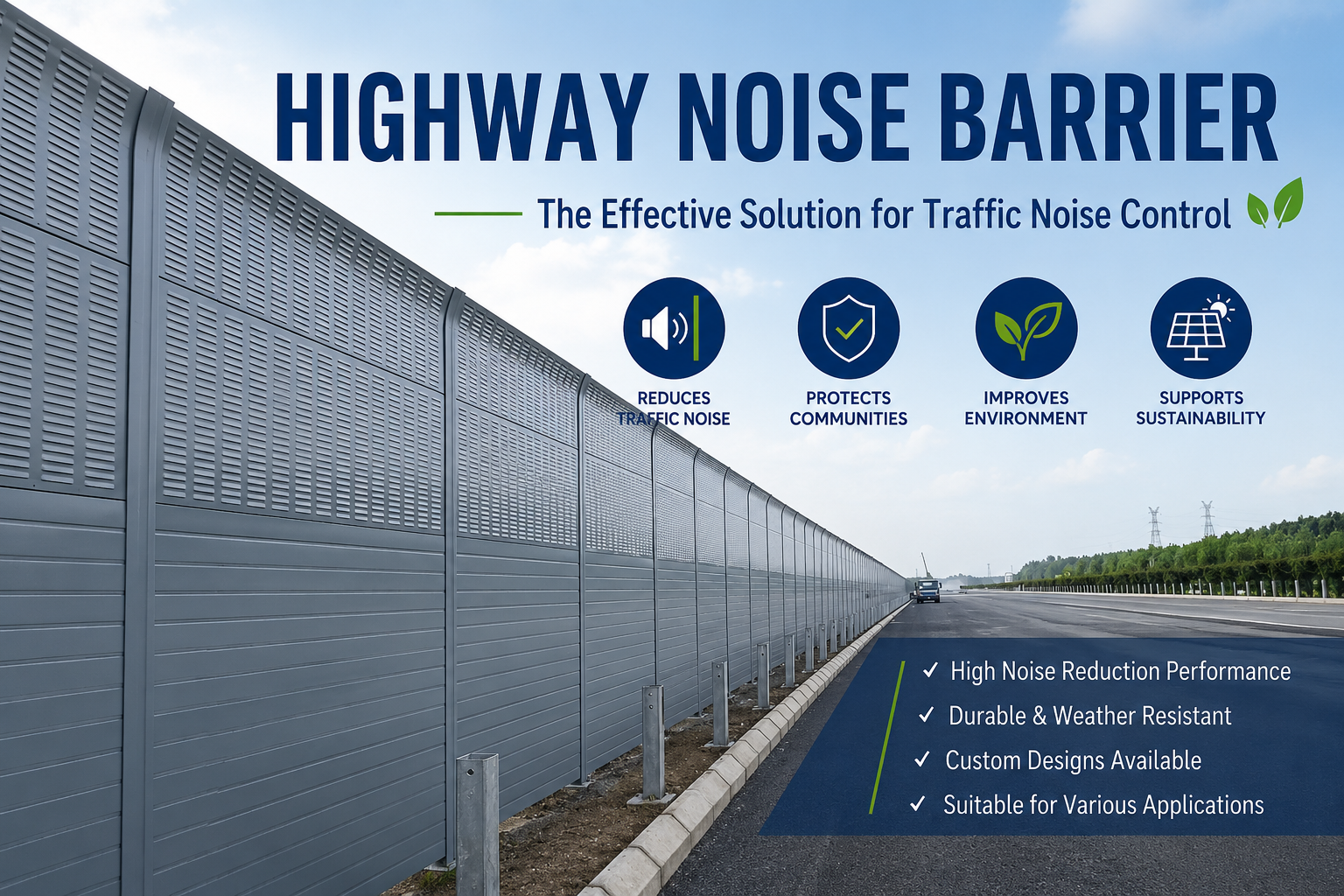
As cities continue to expand and transportation networks become increasingly busy, traffic noise has become one of the most common environmental challenges affecting urban communities. Highways, expressways, and major roads operate around the clock, generating continuous noise from engines, tires, braking systems, and heavy trucks. Without effective noise mitigation, nearby residential areas, schools, hospitals, and commercial buildings can experience significant declines in environmental quality.
A highway noise barrier, also known as a road noise barrier, sound barrier wall, traffic noise barrier, noise wall, or acoustic barrier, is one of the most effective engineering solutions for controlling road traffic noise. These structures are specifically designed to interrupt the direct transmission of sound between vehicles and surrounding communities, helping create quieter and healthier living environments.
This guide explains how highway noise barriers work, their different types, materials, applications, design considerations, and the latest industry trends.
What Is a Highway Noise Barrier?
A highway noise barrier is a specially engineered structure installed alongside highways, bridges, elevated roads, railways, and other transportation corridors to reduce traffic-generated noise.
Its primary purpose is to create a physical obstruction between the noise source—the moving vehicles—and the receiver, such as nearby homes, offices, schools, or hospitals.
Unlike ordinary fences, a traffic noise barrier is carefully designed using acoustic engineering principles. Its height, length, material, and surface characteristics all influence its effectiveness in reducing noise.
Today, highway noise barriers are widely used throughout North America, Europe, Asia, Australia, and the Middle East as part of sustainable transportation infrastructure.
Why Are Highway Noise Barriers Important?
Modern highways often pass through densely populated areas. As traffic volumes increase, so do concerns about environmental noise pollution.
Long-term exposure to excessive traffic noise may lead to:
Sleep disturbance
﹥Reduced work efficiency
﹥Difficulty concentrating
﹥Increased stress levels
﹥Lower residential property values
﹥Reduced overall quality of life
Installing a road noise barrier helps minimize these impacts while improving the surrounding urban environment.
In many countries, environmental regulations require transportation authorities to evaluate noise impacts before constructing new highways. When predicted noise levels exceed legal limits, a highway sound barrier often becomes the preferred mitigation measure.
How Does a Highway Noise Barrier Work?
The operating principle of a sound barrier wall is relatively straightforward.
Sound travels primarily in straight lines. When there is a direct path between highway traffic and nearby buildings, noise reaches residents with little obstruction.
A properly designed acoustic barrier interrupts this direct sound path. As a result:
﹥Direct sound is blocked.
﹥Only diffracted sound travels over the top edge.
﹥The protected area behind the barrier becomes an acoustic shadow zone.
﹥This significantly lowers the sound pressure level experienced by people living behind the barrier.
﹥The effectiveness of a noise wall is measured using Insertion Loss (IL), which represents the reduction in noise levels after installation.
Typical performance includes:
﹥10–15 dB average noise reduction
﹥15–20 dB for optimized systems
﹥Up to 30 dB for fully enclosed structures
Because the decibel scale is logarithmic, even a 10 dB reduction is generally perceived as cutting the noise level by approximately half.
Types of Highway Noise Barriers
Different projects require different types of highway noise barrier systems depending on available space, environmental conditions, and acoustic requirements.
﹥Reflective Noise Barriers
Reflective barriers redirect sound waves away from the protected area.
﹥Advantages include:
• Lower manufacturing cost
• High structural strength
• Long service life
• Suitable for open highway environments
Common materials include galvanized steel, aluminum, and reinforced concrete.
Absorptive Noise Barriers
Absorptive barriers contain sound-absorbing materials such as mineral wool or rock wool behind perforated metal panels.
Instead of reflecting sound, these barriers absorb acoustic energy and reduce secondary reflections.
They are especially suitable for:
﹥Urban highways
﹥Elevated expressways
﹥Residential neighborhoods
﹥Multi-lane roads
﹥Composite Noise Barriers
Composite systems combine reflective and absorptive technologies.
This design provides excellent acoustic performance while maintaining reasonable construction costs.
Today, composite traffic noise barriers have become the preferred solution for many large infrastructure projects worldwide.
Transparent Noise Barriers
Transparent panels are manufactured using materials such as polycarbonate (PC) or laminated acrylic.
They offer several advantages:
﹥Preserve scenic views
﹥Improve driver visibility
﹥Reduce the feeling of enclosure
﹥Blend better with surrounding architecture
Transparent road noise barriers are commonly installed on bridges, scenic highways, and urban expressways.
Fully Enclosed Noise Barriers
Some highways pass directly through highly sensitive areas such as hospitals or research institutions.
In these situations, engineers may construct fully enclosed highway sound walls, which surround the roadway with roof structures.
These systems provide the highest level of traffic noise reduction while incorporating:
﹥Ventilation
﹥Lighting
﹥Fire protection
﹥Drainage systems
﹥Maintenance access
Common Materials Used in Highway Noise Barriers
Material selection plays a major role in determining both acoustic performance and service life.
Common materials include:
﹥Galvanized Steel
One of the most widely used materials due to its:
﹥Excellent strength
﹥Corrosion resistance
﹥Cost effectiveness
﹥Long lifespan
﹥Aluminum Alloy
﹥Aluminum panels provide:
﹥Lightweight construction
﹥Superior corrosion resistance
﹥Easy installation
﹥Attractive appearance
﹥Reinforced Concrete
Concrete barriers offer:
﹥Excellent durability
﹥High structural strength
﹥Effective sound reflection
They are commonly used on heavy-duty highways and bridges.
Polycarbonate Panels
Transparent PC panels are ideal where maintaining visibility is important.
They also offer:
﹥UV resistance
﹥High impact strength
﹥Weather resistance
﹥Long-term clarity
﹥Fiberglass Reinforced Plastic (FRP)
FRP barriers combine:
﹥Lightweight construction
﹥Corrosion resistance
﹥Design flexibility
﹥Low maintenance requirements
Main Components of a Highway Noise Barrier System
A complete highway noise barrier system generally includes:
﹥H-shaped steel columns
﹥Acoustic panels
﹥Base plates
﹥Anchor bolts
﹥Rubber sealing strips
﹥Fastening components
﹥Foundation structures
Each component contributes to the overall structural stability and acoustic performance.
Key Design Considerations
Designing an effective road noise barrier requires much more than selecting a suitable panel.
Engineers typically evaluate:
﹥Barrier Height
A taller barrier blocks more direct sound.
However, excessive height increases:
﹥Wind load
﹥Foundation requirements
﹥Construction costs
The optimal height balances acoustic performance and structural safety.
﹥Barrier Length
A short barrier allows sound to travel around both ends.
Therefore, highway noise barriers usually extend well beyond the protected area to minimize edge diffraction.
﹥Wind Resistance
Highway barriers must withstand:
﹥Strong winds
﹥Storm conditions
﹥Dynamic vehicle pressure
﹥Bridge vibration
Structural calculations ensure long-term safety.
Corrosion Protection
Because highway infrastructure is continuously exposed to rain, sunlight, snow, and road salt, protective treatments such as:
﹥Hot-dip galvanizing
﹥Powder coating
﹥Fluorocarbon coatings
are commonly applied.
Maintenance
Modern noise wall systems are designed for convenient maintenance, allowing damaged panels to be replaced individually without dismantling the entire structure.
Innovative Trends in Highway Noise Barriers
The industry is rapidly evolving beyond traditional noise control.
Solar Noise Barriers
A solar noise barrier integrates photovoltaic panels into the barrier itself.
This innovative solution simultaneously:
Reduces traffic noise
﹥Generates renewable electricity
﹥Powers highway lighting
﹥Supports carbon reduction goals
Solar highway noise barriers are becoming increasingly popular in Europe and Asia.
Green Noise Barriers
Some projects incorporate climbing plants or vertical gardens to improve aesthetics while contributing to urban biodiversity.
These eco-friendly systems help reduce the visual impact of large infrastructure.
Smart Noise Barriers
Emerging technologies include:
﹥IoT monitoring systems
﹥Noise sensors
﹥Structural health monitoring
﹥Remote maintenance management
These intelligent systems improve long-term operational efficiency.
How to Evaluate the Performance of a Highway Noise Barrier
A high-quality highway acoustic barrier should be assessed using several criteria:
﹥Measured insertion loss
﹥Sound absorption coefficient
﹥Sound transmission loss
﹥Structural durability
﹥Corrosion resistance
﹥Wind resistance
﹥Ease of maintenance
﹥Visual integration with surrounding landscapes
Meeting local transportation and environmental standards is also essential for long-term project success.
Choosing the Right Noise Barrier Manufacturer
Selecting an experienced noise barrier manufacturer is just as important as choosing the right product.
A reliable supplier should provide:
﹥Professional acoustic design support
﹥Structural engineering calculations
﹥Custom manufacturing
﹥International quality certifications
﹥Export experience
﹥Technical installation guidance
﹥Long-term after-sales support
Whether the project involves highways, bridges, railways, industrial facilities, or municipal roads, partnering with an experienced manufacturer helps ensure optimal performance throughout the product’s lifecycle.
Conclusion
A highway noise barrier is far more than a roadside wall—it is a critical component of modern transportation infrastructure that protects communities from excessive traffic noise while enhancing environmental sustainability.
With ongoing advances in acoustic engineering, materials science, renewable energy integration, and smart infrastructure, today’s road noise barriers, traffic noise barriers, and sound barrier walls are becoming more durable, efficient, and multifunctional than ever before.
Whether constructed from galvanized steel, aluminum, transparent polycarbonate, or integrated photovoltaic systems, a well-designed acoustic barrier provides long-term noise reduction, improves public well-being, and contributes to the creation of quieter, greener, and more sustainable transportation networks around the world.
FAQ
1.What is a highway noise barrier made of?
Common builds are perforated metal panels with an absorptive core, transparent polymer or glass panels, concrete panels, or hybrids combining an absorptive base with transparent upper sections.
2.What are the main types of highway noise barrier?
The main families are absorptive metal (microporous, louver, aluminium), reflective plate or concrete, transparent, and fully enclosed systems, each matched to site conditions.
3.Which standards apply to highway noise barriers?
Performance is commonly expressed using EN 1793 for absorption and airborne insulation and verified by calculation to ISO 9613-2, with project-specific national requirements added.
4.How is barrier performance verified?
Panel properties are established by laboratory testing and the installed performance is checked by calculation and, where required, by measurement after construction.
Post time: Jul-06-2026