
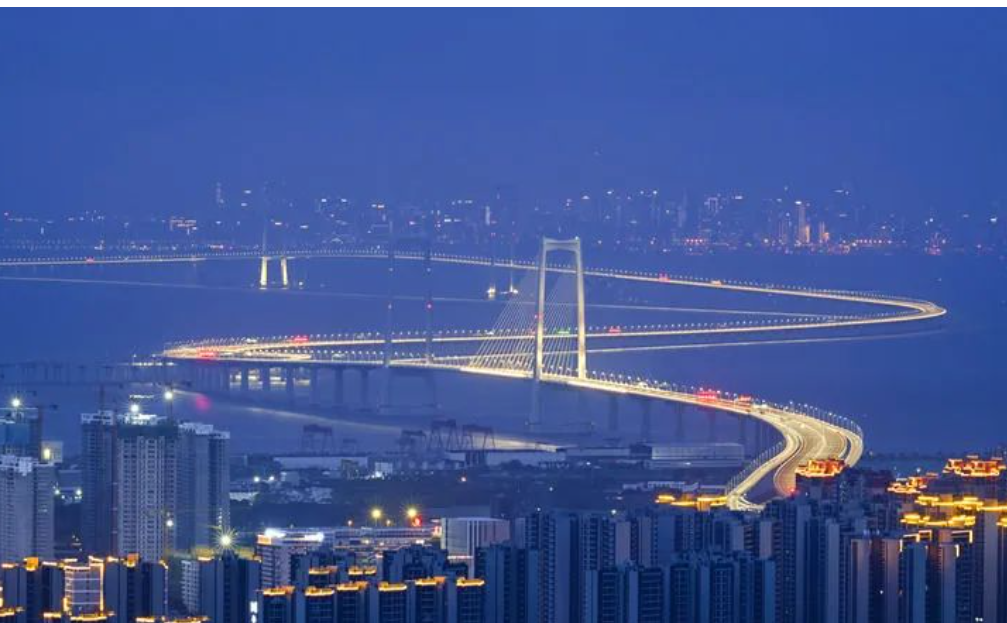
The Shenzhen–Zhongshan link opened to trial operation on 30 June, after seven years of construction. It is 24 km long, designed for 100 km/h, and combines bridge, artificial island, tunnel and an underwater interchange in one alignment — including the world’s longest dual eight-lane submerged tunnel. It is the kind of project that gets described in superlatives, and most of those descriptions are about structures.
JINBIAO’s contribution sat at the edges of it. The company designed and produced approximately 15 km of anti-throwing nets and 2 km of anti-glare screens for the second phase of the riverside expressway that feeds the crossing, and delivered the work in 25 days. Neither product is a noise barrier. Both exist because a very fast, very busy corridor creates hazards that have nothing to do with decibels.
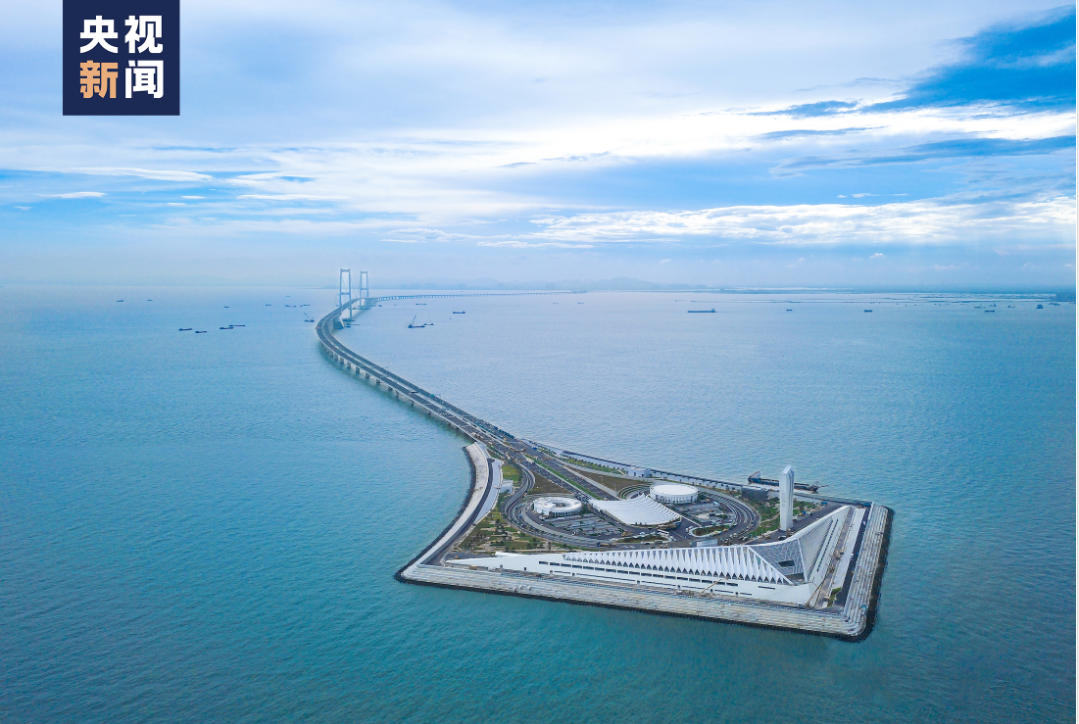
The project at a glance
| Crossing | Shenzhen–Zhongshan link, Guangdong |
| Length and speed | 24 km, design speed 100 km/h |
| Opened | 30 June, trial operation, after seven years of construction |
| JINBIAO scope | Design and production of anti-throwing nets and anti-glare screens, riverside expressway phase 2 |
| Quantities | Approximately 15 km of anti-throwing nets, 2 km of anti-glare screens |
| Delivery period | 25 days |
What an anti-glare screen actually does
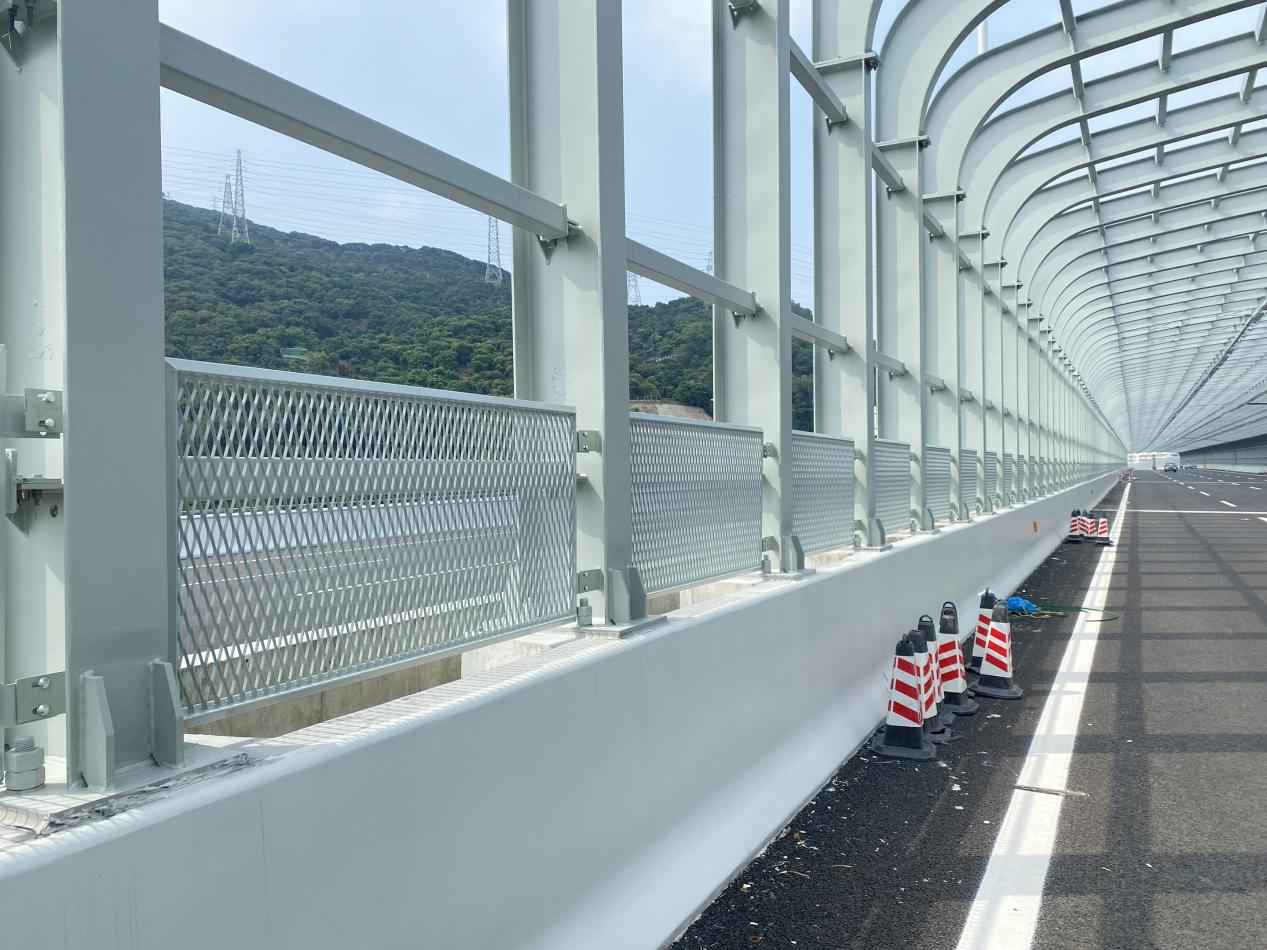
An anti-glare screen is a sightline device, not an acoustic one. It is mounted along the median or the inner edge of a divided carriageway and its job is to stop a driver’s eye meeting the headlights of oncoming traffic across the gap. At 100 km/h the relevant quantity is not the level of the light but its angle: the screen has to intercept the direct line between two sets of headlights at the heights and separations that actually occur, which is why blade geometry, mounting height and the angle of the elements relative to the road all matter more than the material.
This is also why an anti-glare screen can be visually permeable and still work. It does not need to be opaque, only properly aimed. On a crossing of this scale the practical requirements are that the screen survives the wind load on an exposed deck, does not collect debris that would close the anti-glare screen gaps, and stays dimensionally stable enough that an anti-glare screen installed at one blade angle is still at that angle after a few seasons of thermal cycling.
Where a corridor also has an acoustic problem, the anti-glare screen is not the answer and should not be specified as one. Asking one anti-glare screen to block sound as well usually produces a device that does neither job properly.
What anti-throwing nets protect
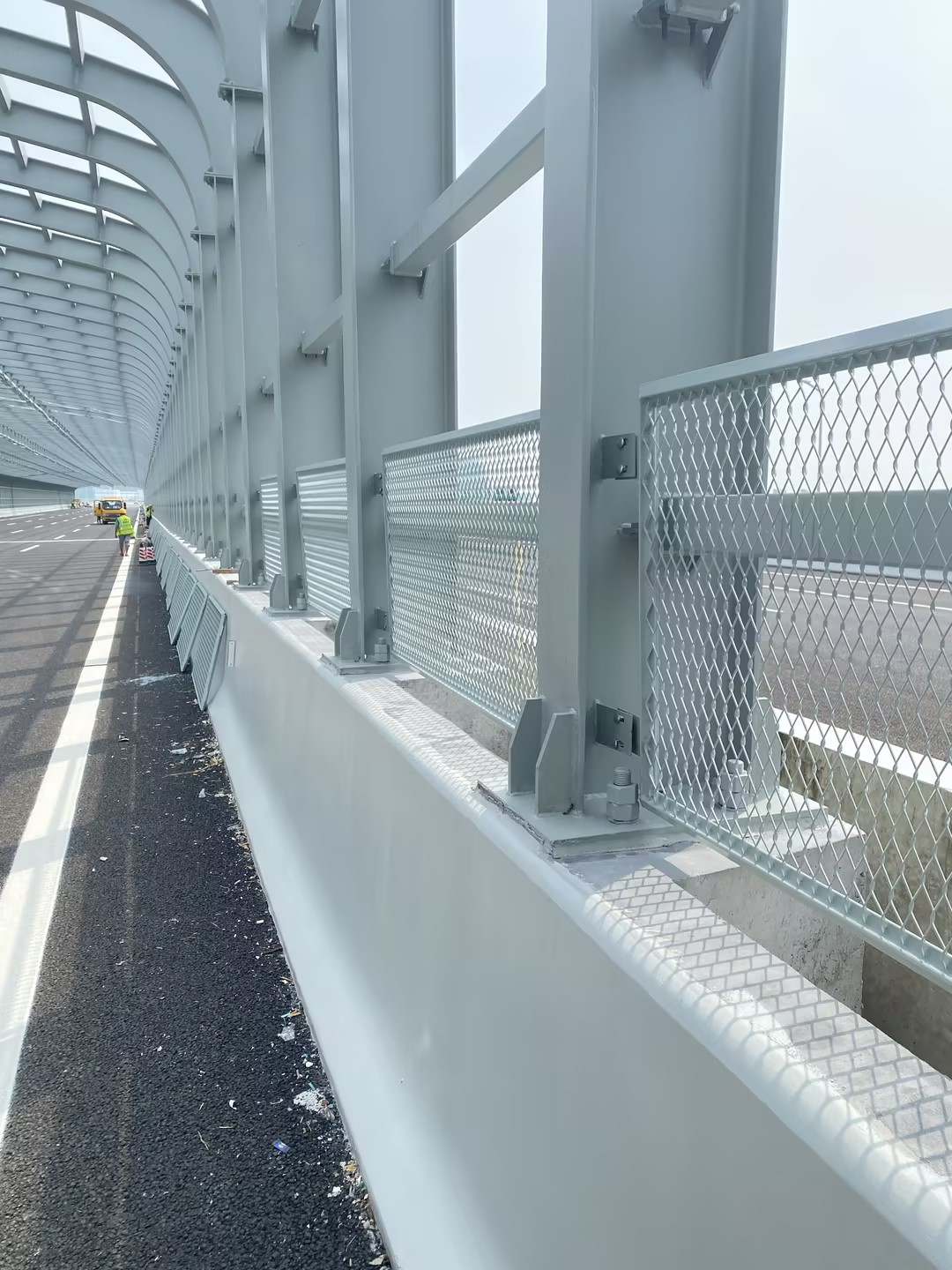
Anti-throwing nets address a different hazard: objects thrown or blown from an elevated structure onto traffic, or from traffic onto whatever passes beneath. Fifteen kilometres of netting on the riverside expressway phase 2 is a defensive system, and its design questions are structural rather than optical — mesh aperture, wire diameter, attachment spacing, and the ability to absorb an impact without progressive failure of the run.
These are the same questions that govern a welded mesh system, which is why the capability transfers. A manufacturer that already produces barrier nets to highway standards is not learning a new trade when it takes on an anti-throwing net; it is applying the same welding, coating and panel geometry discipline to a different duty.
What 15 km of netting and 2 km of anti-glare screen took
The delivery figure is the part worth examining, because 25 days for 15 km of netting and 2 km of screens is not a site labour achievement. It is a production and logistics achievement: the modules have to be designed to a repeatable size, fabricated in parallel rather than in sequence, coated and cured on a schedule that matches shipment, and packed so that the installation crew can lift and fix without unpacking twice.
On a project of this profile, the constraint is that the corridor opens on a fixed date and everything feeding it compresses toward that date. A supplier that cannot compress production simply moves the problem onto the site.
Why a barrier manufacturer ends up on a mega-project
The work sits adjacent to the noise barrier business rather than inside it, and much of the anti-glare screen hardware comes off the same lines. Metal panels, welded mesh, posts, brackets and the coating lines that protect them are shared capabilities, and a project that needs 15 km of netting at short notice is buying exactly those. The distinction matters commercially: a supplier who can only quote acoustic panels will not be invited to a package like this one at all.
What this project shows
- Anti-glare screens are optical devices; specify them by geometry, not by material.
- Do not merge glare control and noise control into one element.
- Anti-throwing nets are structural products, and mesh discipline transfers directly from barrier netting.
- On a fixed opening date, production capacity is the deliverable.
Related systems from the same production base include double welded mesh panels for perimeter and protection duty, and the highway acoustic barrier range where the corridor also needs acoustic treatment.
Post time: Jul-12-2024