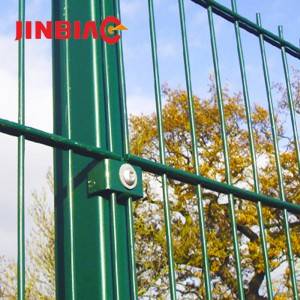
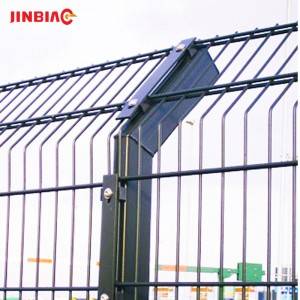
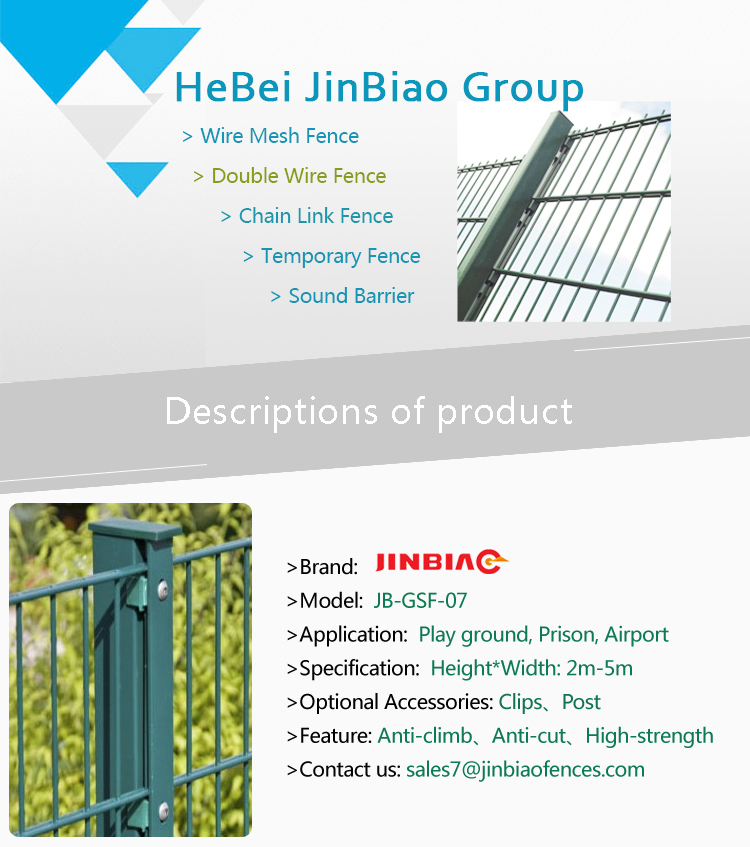
A double wire mesh fence is a rigid welded panel system in which every horizontal wire pair is formed from two parallel wires that sandwich the vertical wires at each intersection. That twin-wire construction is why the panel is also described as a double welded mesh fence or twin wire fence, and it is the reason the panel stays flat and stiff at heights where a single-wire welded mesh would start to flex. Panels are carried on steel posts and bolted in place, so the fence works as a modular perimeter system for highways, industrial plants, depots, utilities, schools and sports grounds.
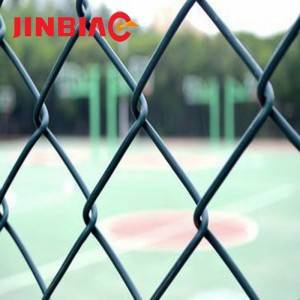
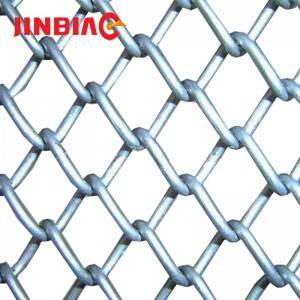
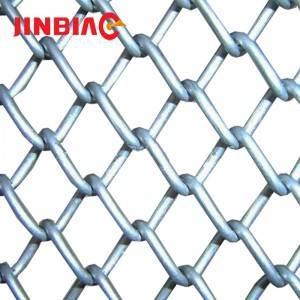
Unlike a woven chain link fence, which depends on a tensioned mesh held between straining posts, a double wire mesh fence is assembled from self-supporting panels. Each bay is an independent welded grid that is clamped to its own posts. On long boundaries that difference matters: a panel system is simpler to align, quicker to repair section by section, and straightforward to extend later without re-tensioning the whole run.
868 and 656: the two standard panels
The two standard double wire mesh fence panels are described by their wire diameters. The first digits give the horizontal wires, the last digit the vertical wire, so the two common versions are:
- 868 double wire fence – two 8 mm horizontal wires with a 6 mm vertical wire. Chosen where the perimeter is long, exposed or needs a higher degree of rigidity, and where the fence may have to resist impact as well as climbing.
- 656 double wire fence – two 6 mm horizontal wires with a 5 mm vertical wire. A lighter panel that suits general boundary marking, amenity areas and internal subdivision.
Both are normally produced with a 200 × 50 mm aperture – 200 mm between horizontal wires and 50 mm between vertical wires. The opening is narrow enough to discourage climbing and to resist cutting, while still keeping the view through the fence reasonably open.
Specification
| Property | Typical range |
|---|---|
| Panel height | 630–2430 mm (commonly 1030 / 1230 / 1530 / 1730 / 2030 mm) |
| Panel width | 2500 mm standard; 3000 mm on request |
| Horizontal wires | 2 × 6 mm (656) or 2 × 8 mm (868) |
| Vertical wire | 5 mm (656) or 6 mm (868) |
| Mesh aperture | 200 × 50 mm |
| Post section | 60 × 60 / 80 × 80 / 100 × 100 mm square tube, or 50 × 70 mm rectangular |
| Post wall thickness | 1.5–3.0 mm |
| Post spacing | 2500 or 3000 mm, matched to the panel width |
| Panel fixing | Steel clamp with M8 security bolt and shear-off nut, or anti-tamper bracket |
| Post base | Cast-in-place concrete footing, or base plate on kerb, wall or bridge parapet |
| Surface treatment | Hot-dip galvanized to ISO 1461; optional polyester powder coating to EN 13438 |
| Colour | RAL 6005 green, RAL 9005 black, RAL 7016 anthracite, RAL 7032; other RAL colours on request |
| Panel standard | Welded mesh panels manufactured to EN 10223-7 |
Material and coating
Panels and posts for a double wire mesh fence are made from low-carbon steel wire and tube, then protected in two stages. Hot-dip galvanizing after fabrication coats the wire, the welds and the cut ends together, which is what allows the same panel to be used in humid and coastal locations. Where a colour is required, a polyester powder coating is applied over the galvanized surface; the coating thickness and adhesion are usually specified against EN 13438, and the colour is matched to a RAL reference so that extensions ordered later still match the original run.
For coastal or heavily humid sites, the specification worth reviewing first is the galvanized coating mass rather than the colour, since corrosion at the post base and at the wire ends is the most common cause of early deterioration. Keeping the post footing clear of standing water and avoiding contact between dissimilar metals at the clamps both extend service life.
Posts, fixings and installation
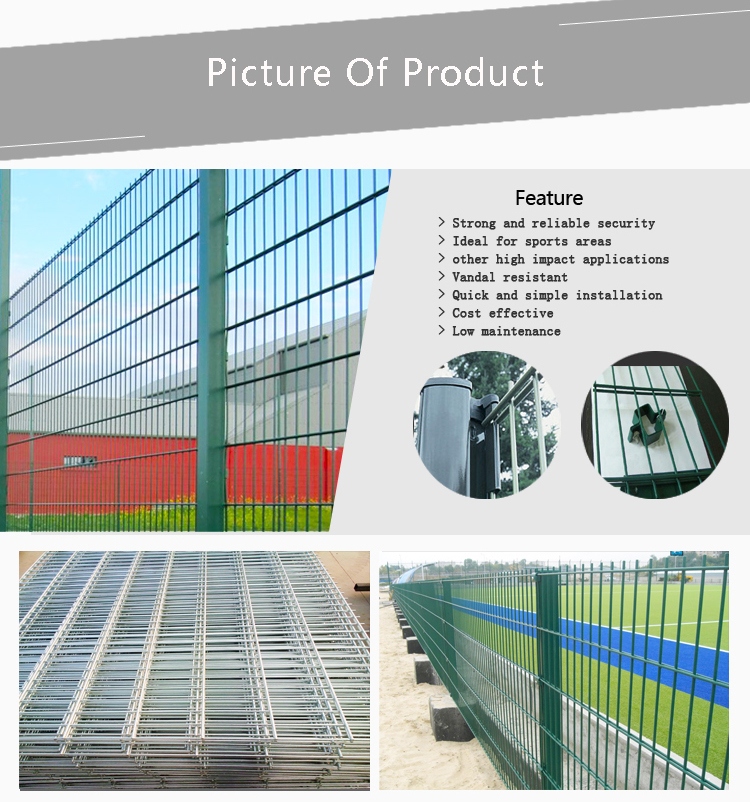
Post size for a double wire mesh fence follows the panel height and the wind load. A taller or more exposed run needs a heavier section, and the footing is sized with it: short runs and light panels are often set on base plates, while free-standing perimeter runs generally use cast-in-place concrete footings. Panels are then lifted between the posts and secured with clamps rather than welded, so a damaged bay can be unbolted and replaced without disturbing its neighbours. Where the perimeter needs vehicle or pedestrian access, matching double leaf or single leaf gates are supplied with the same post and panel finish.
Where a double wire mesh fence is used
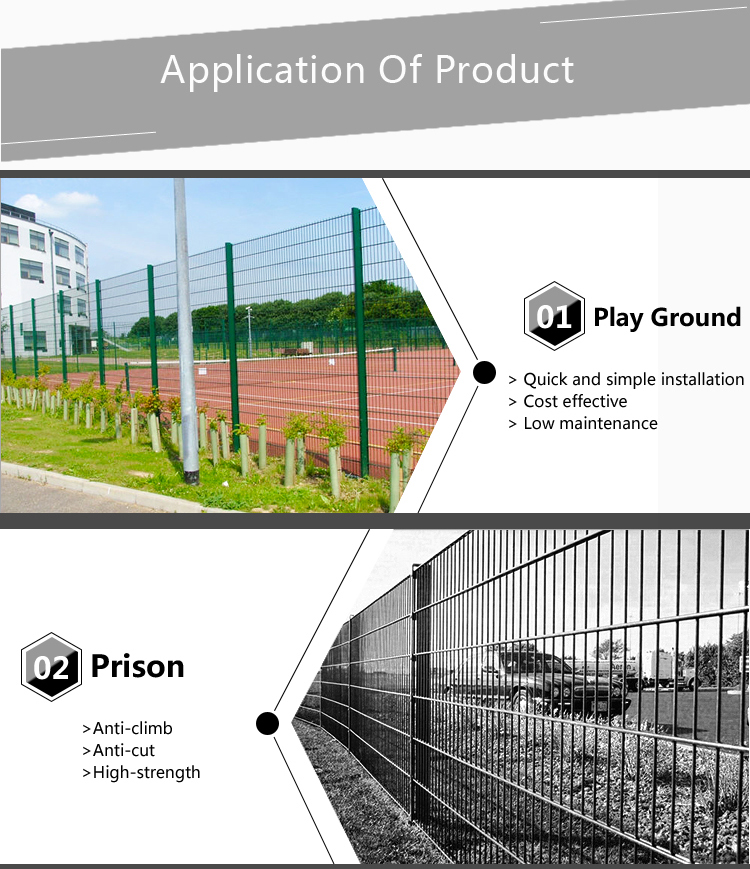
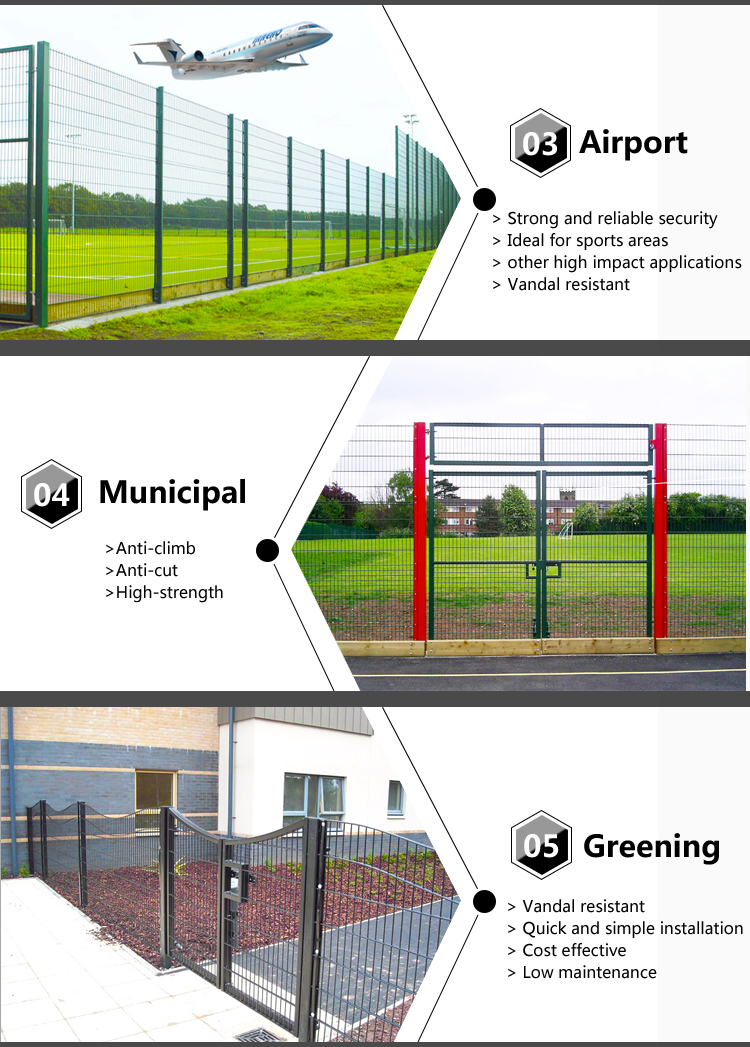
- Highway, motorway and railway boundary and right-of-way fencing
- Industrial plants, warehouses, logistics depots and utility compounds
- Substations, pumping stations and water treatment sites
- Schools, sports grounds and public amenity areas, in coloured finishes
- Airport and port perimeter, usually in heavier sections and with anti-climb detailing
It is often supplied as part of a wider package. Where a project also needs a lighter woven boundary, a chain link fence can be used alongside it, and a 358 security fence is normally specified where the anti-climb and anti-cut requirement is higher. For work areas that are moved or rented, a temporary fence is the usual match, and retaining boundaries use gabion structures. The full range is listed in our mesh fence section.
Along roads the fence frequently runs behind an acoustic wall. If the project includes noise control as well, our guide to highway noise barrier materials sets out how the barrier material is chosen, and the article on noise barrier foundations covers the footing design that the fence and the barrier share on a common alignment.
Ordering information
Numbering: JB-DWF-01
Material: Low-carbon steel wire panel with twin horizontal wires; hot-dip galvanized steel posts
Coating: Hot-dip galvanized to ISO 1461, optional polyester powder coating to EN 13438
Shipping: Sea transport, railway, truck
Service: Sample, customized sizes and colours, drawing review
Certificate: ISO 9001 management system; third-party test reports and inspection (SGS / BV / TUV) available on request
Application: Highway and railway boundary, industrial plant, logistics depot, substation, school and sports ground, airport and port perimeter

Frequently asked questions
1. What is the difference between 868 and 656 double wire fence?
Only the wire diameters: 868 uses two 8 mm horizontal wires with a 6 mm vertical wire, while 656 uses two 6 mm horizontal wires with a 5 mm vertical wire. Both are made in the same 200 × 50 mm aperture and both are supplied on the same posts. The heavier 868 panel is specified where more rigidity or impact resistance is needed; 656 is used where the duty is lighter.
2. Is a double wire mesh fence stronger than chain link?
They resist different things. A double wire panel is rigid, so it holds its shape and is difficult to force open or cut through, and it does not rely on wire tension. Chain link is more flexible and lighter, which suits long runs and sloping ground. Which one is appropriate depends on the threat and the ground profile rather than on one being stronger in every respect.
3. How tall can a double wire mesh fence be?
Panels are commonly supplied from around 630 mm up to about 2430 mm. Above that the post section, the footing and the wind exposure have to be reviewed together, since the fence acts as a sail and the load is carried by the posts. For taller security perimeters an anti-climb extension or a different system is often the more practical route.
4. Can the panels be colour matched to a project?
Yes. For a double wire mesh fence, panels and posts are supplied in RAL colours, with RAL 6005 green the most frequently requested for boundary work. Because the colour is applied as a powder coating over galvanizing, the colour reference and the coating thickness should be recorded on the order so that later extensions match.
5. Do the posts of a double wire mesh fence need a concrete foundation?
Not always. Base plates are used where the fence sits on a kerb, wall, bridge parapet or hard standing, and cast-in-place concrete footings are used for free-standing perimeter runs. The choice follows the ground conditions, the fence height and the wind load for the site, so the footing detail is normally confirmed against the project drawings.
6. Can I get samples or a quotation?
Yes. Send the required heights, the 868 or 656 panel, the colour, the total length or number of bays, the ground conditions and the destination port, and our engineering team will recommend the post section and footing and prepare a quotation.
Need a double wire mesh fence for your perimeter?
JINBIAO GROUP manufactures double welded mesh fence panels, posts, gates and the associated boundary systems, and exports to projects in Asia, Africa, the Middle East and South America. Send your drawings or perimeter schedule through our contact page and our engineering team will come back with a panel and post proposal.