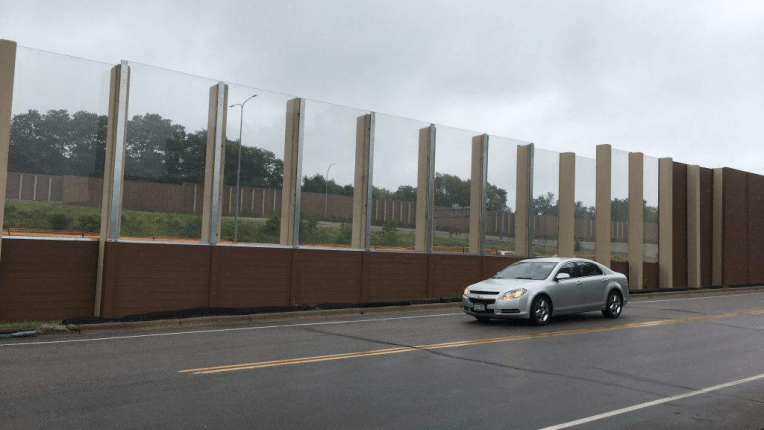
An acrylic transparent noise barrier is a sound barrier whose see-through panels are cast or extruded PMMA sheet, held in galvanised steel or aluminium frames. It is specified where a wall has to reduce traffic noise without taking away daylight, a view or a sightline — along scenic highways, on urban viaducts, outside residential blocks, and anywhere a solid barrier would be read as a wall rather than as infrastructure. The panel does the optical work; the frame, the posts and the panel thickness do the structural work; and the acoustic result comes from the combination, not from the plastic alone.
What an acrylic noise barrier is made of
Acrylic sheet is a thermoplastic with light transmission of roughly ninety per cent at typical barrier thicknesses, which is why an acrylic noise barrier reads as almost invisible from a moving vehicle. It weighs about half as much as glass of the same thickness, so the frame and post loads stay modest and a tall transparent tier does not force a heavier foundation. Sheets are UV-stabilised for outdoor service, and an acrylic noise barrier generally holds its clarity better than an unstabilised polycarbonate panel, which is the trade that decides most specifications.
Acrylic or polycarbonate
The two materials are both transparent and both used in the same frames, so the choice usually comes down to what the site is more likely to suffer. Acrylic wins on clarity and on resistance to yellowing. Polycarbonate wins on impact: it deforms rather than shattering, which matters where stones, vandalism or vehicle contact are realistic risks. A full comparison of the three transparent materials is set out in our acrylic, polycarbonate and glass comparison, and the practical rule is that an acrylic noise barrier suits clean alignments with good sightlines, while impact-exposed locations lean towards polycarbonate.
How acrylic noise barrier thickness is set
There is no standard thickness for a transparent panel, because the panel is a structural element spanning between posts. Thickness follows from the wind load at the site, the clear span between posts, the height of the barrier, and the deflection the project allows. Fifteen and twenty millimetres are common starting points for highway work; a wider module or an exposed coastal site pushes the number up. This is why a supplier asking for site wind data is not being awkward — the panel cannot be priced or warranted without it.
Frames, gaskets and movement
Acrylic noise barrier panels are never fixed rigid on all four edges. Acrylic expands and contracts with temperature far more than steel does, so the frame has to hold the panel securely while allowing it to move. In practice that means EPDM or similar gaskets, a controlled rebate depth, and fixings that do not clamp the sheet hard at every point. An acrylic noise barrier that has been bolted tight will either craze around the fixings or bow between them within a season or two.
What it does and does not do acoustically
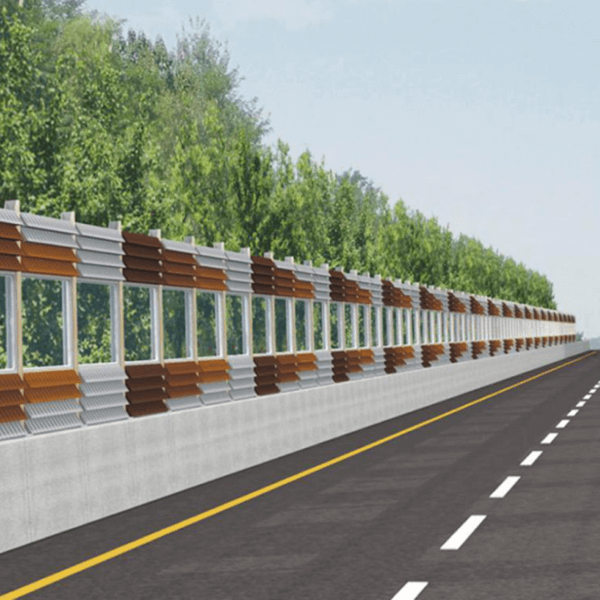
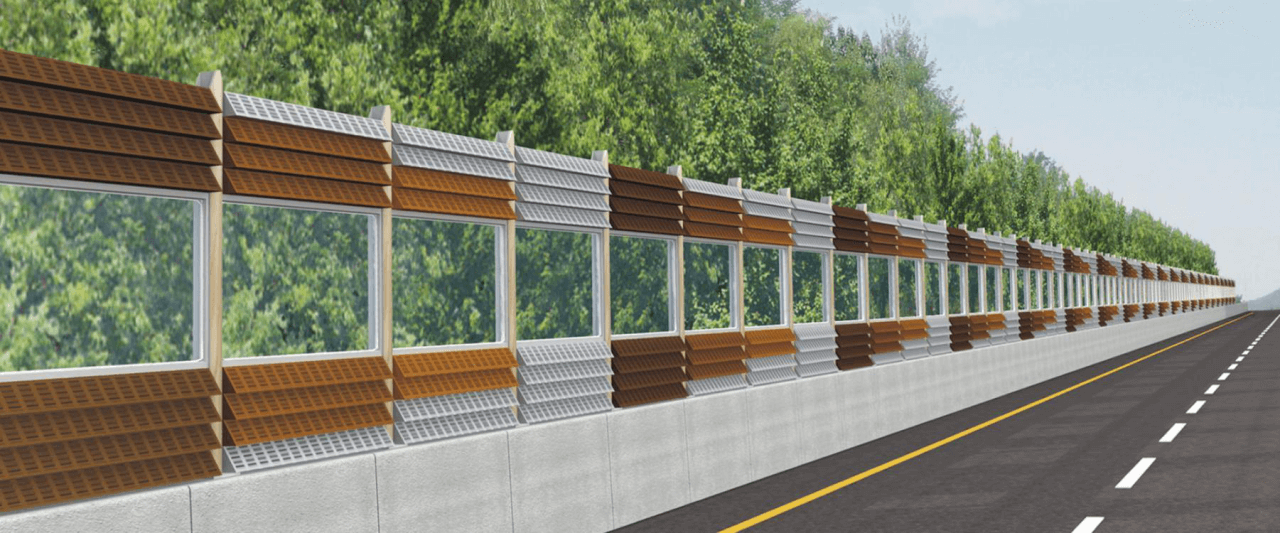
An acrylic noise barrier panel is a reflective, mass-controlled element. It blocks sound by weight and stiffness; it does not absorb it. On a single-sided barrier that is usually acceptable. Between parallel barriers, over a narrow corridor, or where a receiver sits opposite a reflective wall, the reflected energy comes back into the road space and the net gain falls. In those cases the transparent tier belongs above an absorptive lower section, so the wall keeps light at eye level while the acoustic duty is carried by perforated absorptive panels below.
Light, cleaning and fire performance
Cleaning is straightforward with water and a mild detergent; abrasive pads, ammonia-based cleaners and dry wiping on a dusty surface are what dull a panel over time. Panels are usually reachable from a maintenance vehicle, and individual sheets can be replaced without dismantling the run.
Fire performance needs an honest answer rather than a reassuring one. Acrylic is a combustible thermoplastic and softens at modest temperatures, so where a project carries a classified fire requirement, the specific product’s test evidence has to be checked against that classification rather than assumed from the word “acrylic”. Polycarbonate grades can be specified to meet stricter classes where that is the governing constraint.
Typical acrylic noise barrier specification
| Item | Typical range |
| Panel material | Cast or extruded PMMA (acrylic), UV-stabilised |
| Panel thickness | 15 mm / 20 mm common; set by wind load and span |
| Light transmission | Approximately 90% |
| Frame | Galvanised steel or aluminium, powder coated to RAL |
| Gasket | EPDM or equivalent, allowing thermal movement |
| Post spacing | Usually 2 m to 4 m, following the acoustic and structural design |
| Colour options | Clear, bronze, grey, green and blue tints |
What to send for a quotation
Barrier length and height, the post spacing or module you intend to use, the design wind speed at the site, whether the transparent tier is full height or an upper band, the colour or tint required, and whether any fire classification applies. With those, an acrylic noise barrier can be priced as a system rather than as loose sheets.
FAQ
1.What is the difference between acrylic and polycarbonate transparent barriers?
Both are transparent plastics; acrylic offers high clarity while polycarbonate offers higher impact strength – selection depends on site requirements.
2.What thickness of acrylic is used for noise barriers?
Panel thickness is engineered per span and wind-load requirements; provide site conditions for a recommendation.
3.Are acrylic panels resistant to scratches and cleaning?
Anti-scratch coated options exist; regular cleaning with suitable agents maintains clarity.
4.Where are acrylic transparent barriers mainly used?
Scenic highways, urban viaducts, residential viewpoints and areas where preserving sight lines matters.
5.Can an acrylic panel be replaced on its own?
Yes. Panels sit in individual frame openings, so a damaged sheet can be changed without removing the posts or the adjoining panels.
6.Why does an acrylic noise barrier need an absorptive section behind it?
Transparent panels reflect rather than absorb. Where a second wall faces the first, or the receiver sits opposite a reflective surface, adding absorptive panels below the transparent tier keeps reflected energy out of the corridor.